The Hundred-Maker’s Case: Why York Should Fear Maguire’s Grind, Not Just His Flash
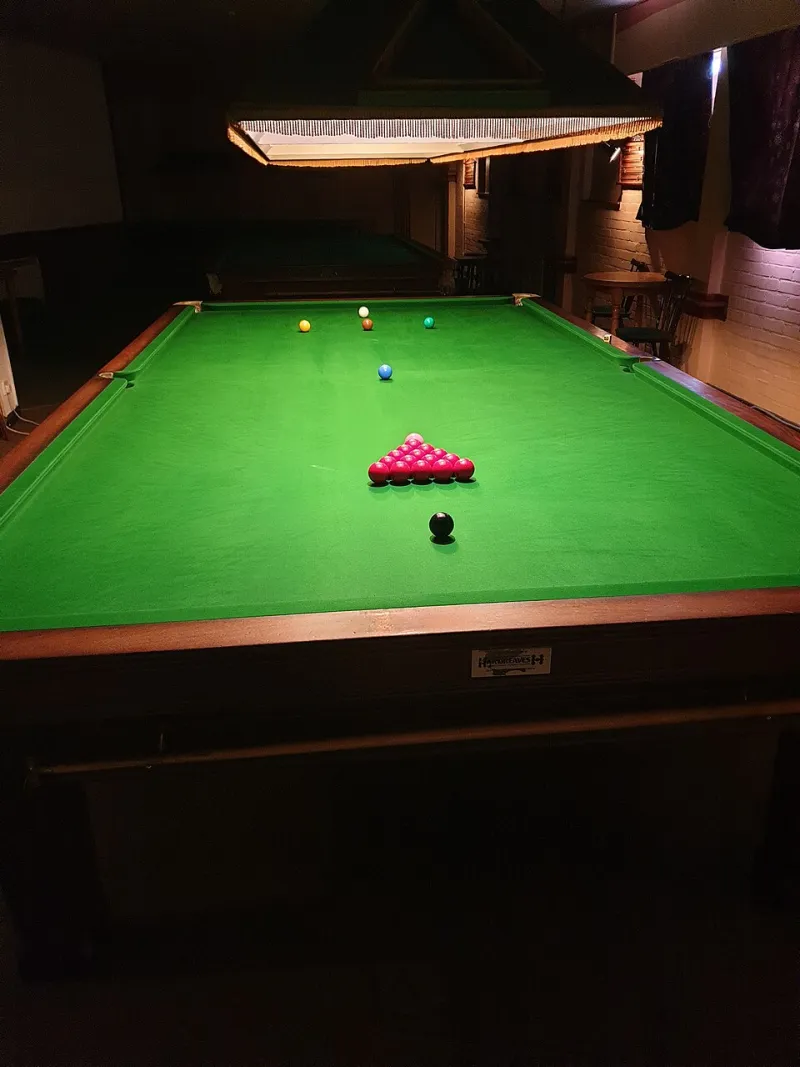
Photo: Lee Vilenski, CC BY-SA 4.0, via Wikimedia Commons
There is a version of Stephen Maguire that lives in the highlight reel: the cueman who sees a maximum, chases it, and dares the table to blink first. That version is thrilling, noisy, and endlessly shareable. It is also only half the story.
The other half is quieter. It is the 70, the 84, the 103, the 112. It is the unglamorous habit of turning a half-chance into a frame-winning visit and then doing it again two frames later. As the 2026 UK Championship approaches, that habit is the reason York should be wary of Maguire. The 147 is the poster. The century is the engine.
The Maximum Is the Poster, the Century Is the Plumbing
Snooker has a funny relationship with the century break. It is the basic unit of elite scoring, the thing every professional can do on a good day, and yet it is also the thing that separates the dangerous from the merely tidy. A fifty might win a frame. A century usually ends the argument.
Maguire’s brand has always leaned towards the spectacular. The maximum-break culture that surrounds him is real, and it is earned. But the maximum is a rare event with a thousand ways to go wrong. The century is repeatable. It is built on routine, shot selection, and the cold-blooded decision to keep the cue ball on a string rather than chase glory.
That is why the century habit deserves more attention than it gets. It is the plumbing of his game. It is what keeps him in matches when the long potting is not quite there, and what turns a scrappy 4-2 lead into a 6-2 cushion.
Clusters, Not Cameos
The most revealing thing about Maguire’s scoring is not that he makes centuries. It is that he makes them in clusters. When he finds rhythm, he does not produce one lovely break and then retreat into safety. He piles visits together. A 78 is followed by a 64. A 103 is followed by a 91. The opponent sits, unscrews the cue, and starts doing arithmetic.
You saw the pattern in the big matches that made his name. The 2004 UK Championship final against David Gray was not just a 10-1 procession; it was a statement about how quickly Maguire could turn a frame into a closed shop. The 2008 China Open final against Shaun Murphy had the same texture: heavy scoring under pressure, not just flair. The 2020 Tour Championship run was a later reminder that when Maguire is fluent, the centuries come in waves rather than isolated splashes.
That clustering matters more than any single maximum. A one-off 147 is a great story. A run of four 80-plus visits across two sessions is a problem for the other man.
The Conversion Rate That Actually Wins Frames
Break-building stats can be argued over, but the principle is simple. The conversion rate that wins frames is not how many maximums you make per season. It is how often you turn a first scoring chance into a frame-winning visit.
Maguire has spent most of his career as a heavy scorer because he understands the difference between a chance and a kill. A 50 leaves the table open. A 70 might still leave a snooker needed. A century removes the conversation. When his cue ball is behaving, he does not just outscore opponents; he removes their oxygen.
That is the bread-and-butter scoring that gets overlooked when the maximum-break brand takes over. Fans remember the 147 attempt. Players remember the 104 that put them 5-2 down and made the interval feel like a funeral.
What York Needs From Him
The UK Championship is a strange beast. Early rounds are short enough that one hot streak can decide a match. A best-of-11 is not a marathon; it is a sprint with tea breaks. In that format, two centuries can be half the job.
York’s Barbican stage rewards players who can settle quickly and score heavily before the table starts to feel heavy. Maguire’s century habit gives him a route to that. He does not need to be perfect for a fortnight. He needs to be ruthless for six or seven visits a match.
If he makes a 147 in York, the roof will come off. But the more meaningful question is whether he can make three or four centuries across a week and keep his opponents glued to their seats. That is the version of Maguire that wins titles, not just applause.
The Risk Beneath the Habit
None of this is to say the maximum instinct is a flaw. It is part of what makes him watchable, and part of what makes him dangerous. The risk is only that the highlight-reel version of Maguire can overshadow the grinder. The maximum is a choice. The century is a habit. One is a fireworks display; the other is a furnace.
So cheer the 147s. Share the clips. But when the 2026 UK Championship gets serious, watch the scoreboard for the quieter numbers. The hundreds are where Maguire’s real threat lives.