One Ball Short of Immortality: Snooker’s Cruellest Maximum Misses
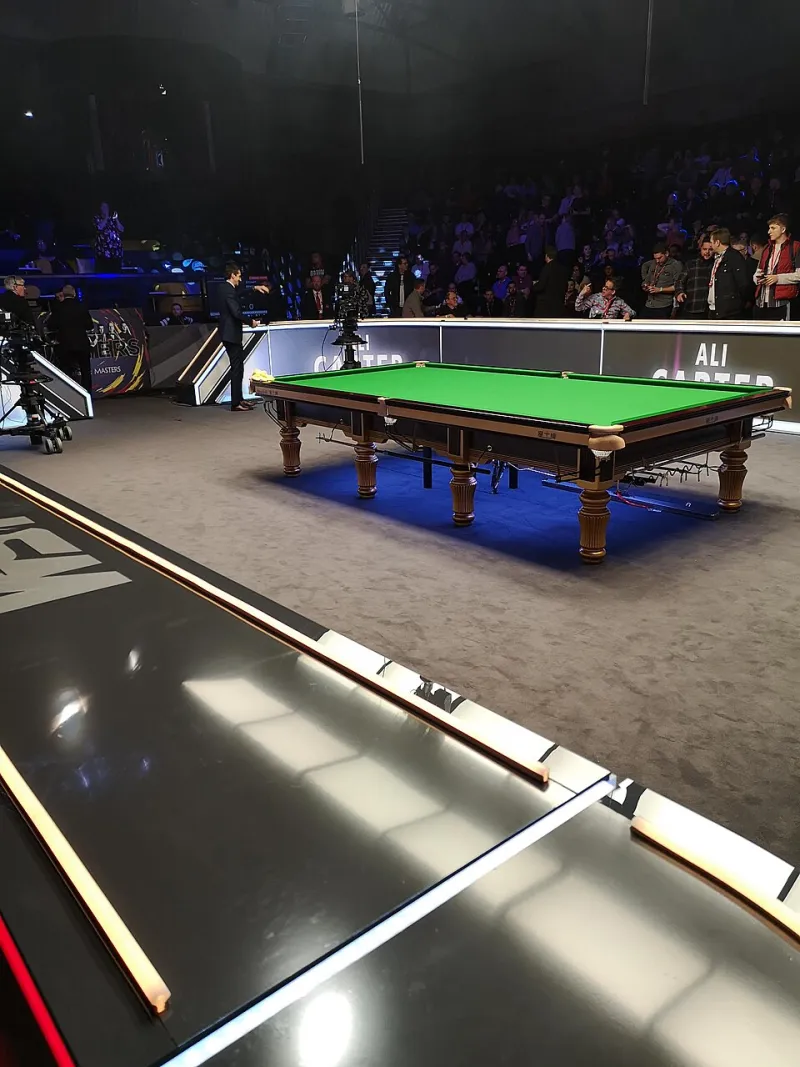
Photo: Krangsbody, CC BY-SA 4.0, via Wikimedia Commons
The break that has everything except the ending
A maximum break is not simply fifteen reds and fifteen blacks. It is a small act of theatre: the crowd goes quiet, the commentators start doing arithmetic, and the player tries to pretend that nothing unusual is happening. The 147 is snooker at its most pure and most cruel. It asks for precision, patience and a kind of denial. For three or four minutes, the table becomes a tighter, more hostile place.
And that is why the near-miss lingers. A century is a good break. A 140 is a fine break. But a 147 attempt that dies on the final black is not a scoreline — it is a story. It is the moment the frame stops being about winning and starts being about history. For Stephen Maguire fans, that feeling is familiar. His game has always looked built for maximums, and his brushes with perfection are part of the Maximum Maguire lore.
The final black is a cruel little planet
Snooker’s cruellest maximum misses usually share a shape. The reds have split kindly. The white has stayed on its string. The awkward balls have been dealt with. Then comes the final black, and suddenly the table feels enormous. Players talk about the crowd, the silence, the way the cue feels different. It is not really about the pot. It is about everything around the pot.
The final black has produced some of the game’s most painful images: a player frozen over the shot, chalk not quite applied, a deep breath that does not quite work. Sometimes the ball lips out. Sometimes it rattles. Sometimes it never gets close. The common thread is that the break was not lost to a bad shot but to a twitch at the wrong moment — a fraction of a fraction at 140.
There is also the chalk-flicked variety of disaster, the kind that feels almost comic afterwards and absolutely tragic at the time. A maximum can survive a bad positional shot. It can survive a lucky kiss. It cannot survive a momentary loss of routine. That is the brutal bargain of the 147: it demands fourteen nearly perfect shots and then one more that feels like the first.
Maguire and the fine margins
Maguire’s game has always looked made for maximum-break culture. The cue action is compact. The break-building is heavy rather than fussy. He is one of those players who can make a table look simple when the mood is right, and who can make a crowd lean in when the reds start behaving. That is why his near-misses hurt more than most. They are not freak events. They are the shadow side of a game that is genuinely built for the big break.
For supporters, the exact frame does not always matter. You remember the feeling: the break is flowing, the white is doing what it is told, and then the awkward ball arrives. The crowd starts doing the maths. The player keeps his face still. The routine slows by half a second. You know what is at stake, and so does he. That is the Maguire maximum experience in miniature — the sense that perfection is close enough to touch but still not quite yours.
Those misses reveal something about nerve that a clean 147 does not. A maximum made is a triumph of routine. A maximum missed is a study of how fragile routine can be. The player has to forget the score, forget the crowd, forget the prize. Maguire has spent a career trying to do exactly that, sometimes beautifully and sometimes agonisingly.
Routine is a fragile thing
At 140, the table shrinks. Players describe it in different ways: the pockets look smaller, the cue feels heavier, the silence gets louder. The technical job is straightforward — pot the black — but the mental job is not. The mind starts to race ahead. It sees the headline. It hears the roar. It starts writing the ending before the ball has dropped.
That is why the best maximum-break players are often the ones who can stay almost boring. They chalk at the same speed. They walk around the table at the same pace. They do not look at the scoreboard. They do not let the occasion in. The near-miss is usually the moment when the occasion wins.
You can see it in the body language. The shoulders tighten. The back hand grips a little harder. The cue comes through a fraction differently. In a normal break, that might cost position. In a maximum attempt, it costs immortality. Snooker is a game of fine margins, but the 147 is where those margins become almost microscopic.
Why we remember the misses
Centuries are statistics. Near-misses are stories. That is the odd bargain of snooker nostalgia: we remember the breaks that did not happen as vividly as the ones that did. A missed final black can define a tournament for a fan. It becomes a pub talking point, a YouTube clip, a shared grimace. The player moves on. The audience does not.
For Maguire supporters, that is part of the deal. Maximum Maguire is not just about the clean 147s. It is about the ones that got away, the frames where the table opened up and the air changed. Those breaks tell us what kind of player he is: someone who can produce the heavy scoring, someone who can hold a crowd, someone who has come close enough to know exactly how much it costs.
The Maguire lesson
The lesson of the cruellest maximum misses is not that perfection is impossible. It is that perfection is fragile. It needs routine, nerve and a little luck with the awkward ball. Maguire has all the ingredients. That is why the near-misses still hurt. They are not evidence of a flaw. They are evidence of how close he has been.
And that is why we keep watching. A 147 is the promise of snooker. A near-miss is the truth of it. One ball short of immortality, the table still has something to say.