Perfection’s Price Tag: What Maguire’s Maximums Reveal About the 147 Economy
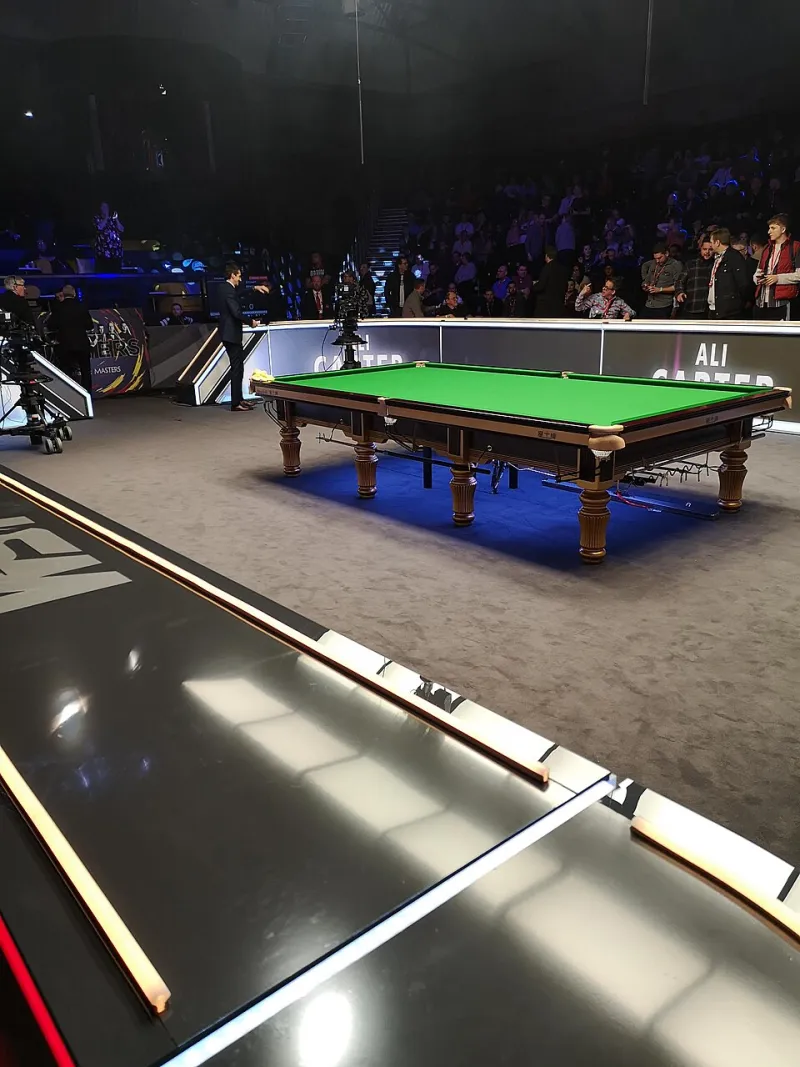
Photo: Krangsbody, CC BY-SA 4.0, via Wikimedia Commons
Ask a snooker fan what a 147 is worth and you will get a misty-eyed answer about history, nerve and the sort of silence that settles over a arena when the black is the only ball left. Ask a player’s accountant and you will get a spreadsheet. Both answers are right, which is exactly why the maximum break remains snooker’s most awkward beautiful thing.
Stephen Maguire knows the territory better than most. His maximums have arrived at different stages of a long career, and each one tells us something about the strange economy of perfection. A 147 is not simply a frame won. It is a headline, a cheque, a sponsor’s dream and, quite often, a target pinned to your back for the rest of the week.
The pot isn’t always the point
In 2026-27, the financial architecture around the maximum break is as patchy as ever. Some events roll the prize over when nobody clears the table. Others cap it at a set figure. A few rely on sponsor sweeteners or a bonus tied to a particular tournament. The result is that two identical 147s can be worth wildly different amounts depending on the week, the venue and whether the promoter woke up feeling generous.
That is the first part of what we might call the 147 tax: the uncertainty. Players do not know, from one month to the next, whether the perfect break is a five-figure windfall or a framed certificate and a round of applause. For a journeyman pro, that matters. For a name like Maguire, it matters less financially but just as much competitively, because every maximum changes the mood around a tournament.
Rollovers, sponsors and the taxman
Rollover pots are snooker’s version of a fruit machine. If no one hits the jackpot at one event, the money swells for the next. That creates a peculiar kind of pressure. A player on 140 knows the crowd is thinking about the prize fund as much as the break. The commentator mentions the rollover. The opponent sits in the chair trying not to think about it. And the player at the table has to pretend the whole thing is just another routine clearance.
Maguire has always looked like a man who enjoys that kind of theatre, even if he would never admit it. His cue action is built for heavy scoring, and his maximums have often felt like statements of intent rather than accidental fireworks. But the modern 147 economy is not just about the winner’s cheque. There are sponsor bonuses, exhibition invitations, equipment deals and the intangible value of being the answer to a quiz question. None of that is guaranteed, and none of it is paid at the table.
Then there is the more literal tax. Prize money is taxable, and a maximum break can push a player into a different financial bracket for the year. It is not the sort of problem most of us would turn down, but it adds to the sense that a 147 is never quite as simple as it looks. The romance is real. So is the paperwork.
Maguire’s ledger
Maguire’s own maximum-break history is a useful lens because it spans different eras of the sport. He came through when a 147 still felt like a genuine event, not a weekly occurrence. He has seen the prize pots rise, fall, roll over and disappear. He has also seen what a maximum can do for a player’s reputation: the way it confirms a scorer’s licence, the way it makes casual fans sit up, the way it turns a quiet first-round match into a clip that travels.
That is the intangible return. A 147 does not add a ranking point on its own. The frame still has to be won, and the tournament still has to be negotiated. But it adds something harder to measure: belief. For a player in his forties, as Maguire is now, every maximum is a reminder that the scoring power has not gone anywhere. For the fans, it is a reminder of why we watch.
What it’s actually worth in 2026-27
So what is a maximum worth in the current season? Financially, it depends on the event. At the biggest tournaments, a 147 can still be a meaningful payday, especially if a rollover has built up. At smaller ranking events, it can be closer to a bonus than a jackpot. In legacy terms, it is worth more than ever, because the highlight reel is global and the clip lives forever. In career terms, it is worth exactly what the player makes of it: confidence, leverage, a line on the CV.
The 147 tax is the gap between those things. It is the pressure of knowing that everyone expects the black to drop. It is the awkwardness of a rollover pot that belongs to the tournament as much as the player. It is the realisation that perfection is both priceless and priced.
Maguire, one suspects, would not have it any other way. A maximum break is snooker’s purest contradiction: a moment of complete control that creates complete chaos around it. In 2026-27, that contradiction is still worth watching, still worth talking about and still worth a few quid in the right week.