The Recovery Room: Why Maguire’s Blue-to-Baulk Shot Is the Real Maximum Signal
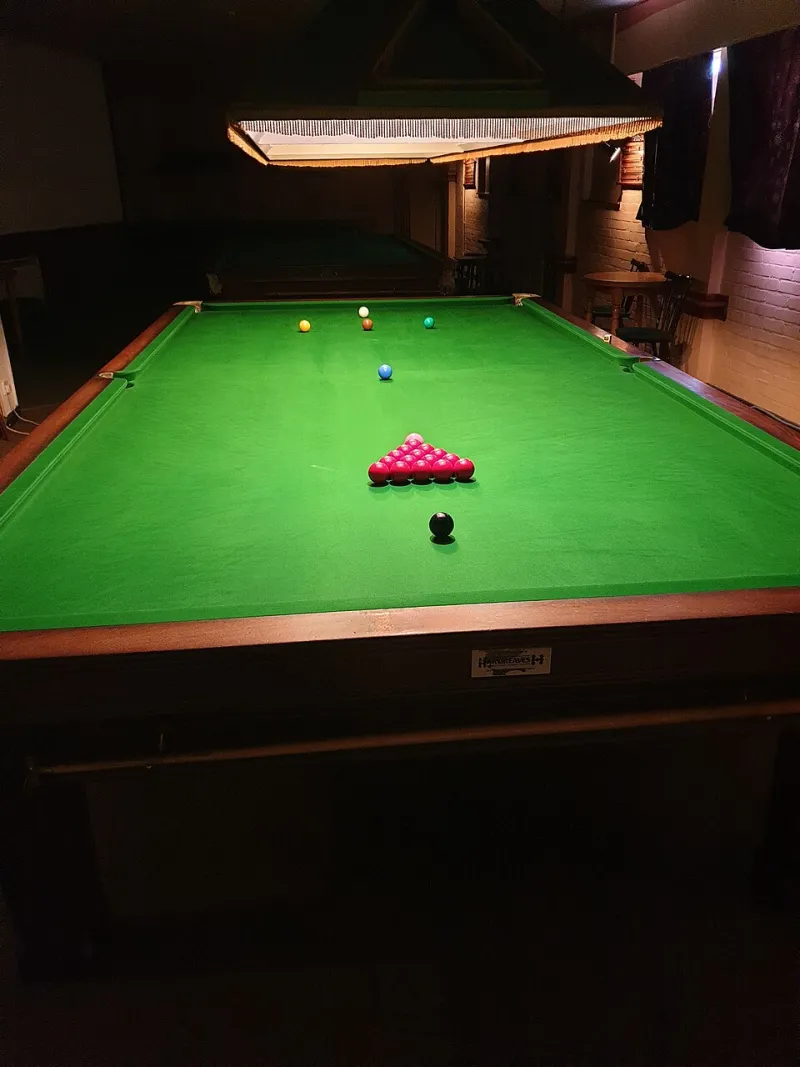
Photo: Lee Vilenski, CC BY-SA 4.0, via Wikimedia Commons
Maximums are sold on the flashy stuff. The long red to the far pocket, the screw-back black, the final pink thumped in with the arena holding its breath. Fair enough. But if you want to know when Stephen Maguire is genuinely in maximum mode in 2026, don’t watch the pot. Watch what happens after the blue.
The Shot Nobody Clips
When Maguire is on the blue with an awkward angle, there is a positional pattern he returns to again and again. He pots the blue and sends the cue ball back down towards the baulk end. Not a lazy drift, not a safety escape — a purposeful screw or stun shot that takes the white towards the baulk cushion with just enough pace and side to bring it back into the reds. The baulk-end blue, in other words, is not an accident. It is the hinge on which the break turns.
That is the tell. Plenty of players can make a long red and move nicely into the pack. Plenty can knock in a century when the table is wide open. The harder skill is keeping a maximum alive when the blue leaves you with a choice between a safe little nudge and a recovery shot that has to be almost exactly right. Maguire, when he is serious, takes the recovery shot.
Why the Blue Is a Fork in the Road
The blue is a strange ball in snooker. It sits in the middle of the table, which means it should be the easiest ball on the table. But it is also the ball that decides what kind of break you are having. Play it well and you stay in the reds. Play it cautiously and you often end up playing safe. Play it with ambition and you can split the pack, release reds into scoring positions and turn a tidy 40 into something much heavier.
For Maguire, the blue is less of a scoring ball and more of a steering wheel. When he is chasing a maximum, he does not want to get stuck on the blue and then settle for a thin red to a baulk pocket. He wants the cue ball to come back through the baulk end and re-enter the reds from an angle that gives him options. The pattern looks conservative — going away from the action — but it is actually a risk that creates freedom later in the break.
The Recovery Into the Reds
This is the bit that separates a good break from a maximum attempt. After the cue ball hits the baulk cushion, it has to come back into the reds at the right speed. Too slow and it dies in the middle of the table, leaving a long red or a safety. Too fast and it slams into the pack, scattering reds everywhere and killing the positional plan. Maguire’s version is usually in between: enough pace to disturb the reds, enough check side to hold the angle, enough control to leave a red he can actually use.
It is not a glamorous shot. It does not get a murmur from the crowd. But it is the difference between a break that is merely ticking over and a break that is building towards something. When that recovery works, Maguire suddenly has reds to both corners, the pink and black still available, and the cue ball back under his thumb. That is when the 147 instinct kicks in.
A Frame Example From 2026
Picture a frame from this season. Maguire pots a red to the middle, drops on the blue, and the angle is slightly wrong — too straight to move naturally into the pack, too angled to play a simple stun. Most players would take the easy red to the baulk corner and accept a smaller break. Maguire screws the blue, sends the white to the baulk cushion, and brings it back into the reds with a little right-hand side. The cue ball clips the pack, knocks two reds towards the middle pockets and finishes near the pink. He then punches a red into the middle and is straight back on the blue.
The pot itself was mundane. The recovery was the whole frame. That little blue-to-baulk sequence kept the break alive and, more importantly, kept the table open. A few shots later he is on 60 and the crowd is starting to do that thing where they pretend they are not thinking about a maximum. They are. So is he.
Why It Matters More Than the Long Pot
The long red is the headline. The blue-to-baulk recovery is the engine. Long pots get you into a break; the recovery shot keeps you in it when the table is not perfectly laid out. Maguire’s heavy scoring in 2026 has often been built on these unglamorous middle-of-the-break decisions: taking the blue away from the obvious angle, using the baulk cushion, and trusting the white to come back into the reds.
That is also why the pattern is such a good tell. When Maguire is just trying to win a frame, he can play the percentages. When he is chasing history, he plays the shot that keeps the maximum alive. The blue-to-baulk recovery is the quiet signal. It says he is not settling for a 50. It says he wants the break to keep going.
The Quiet Tell
So next time Maguire is on the blue and the white starts heading back towards baulk, don’t switch off. That is not the boring bit. That is the bit where the maximum attempt is being built. The long red might get the replay, and the final black might get the roar, but the recovery room is where Maguire’s 147 instinct actually lives.