Chalk Dust and Clyde Wind: The Glasgow Halls That Forged Maguire’s Century Instinct

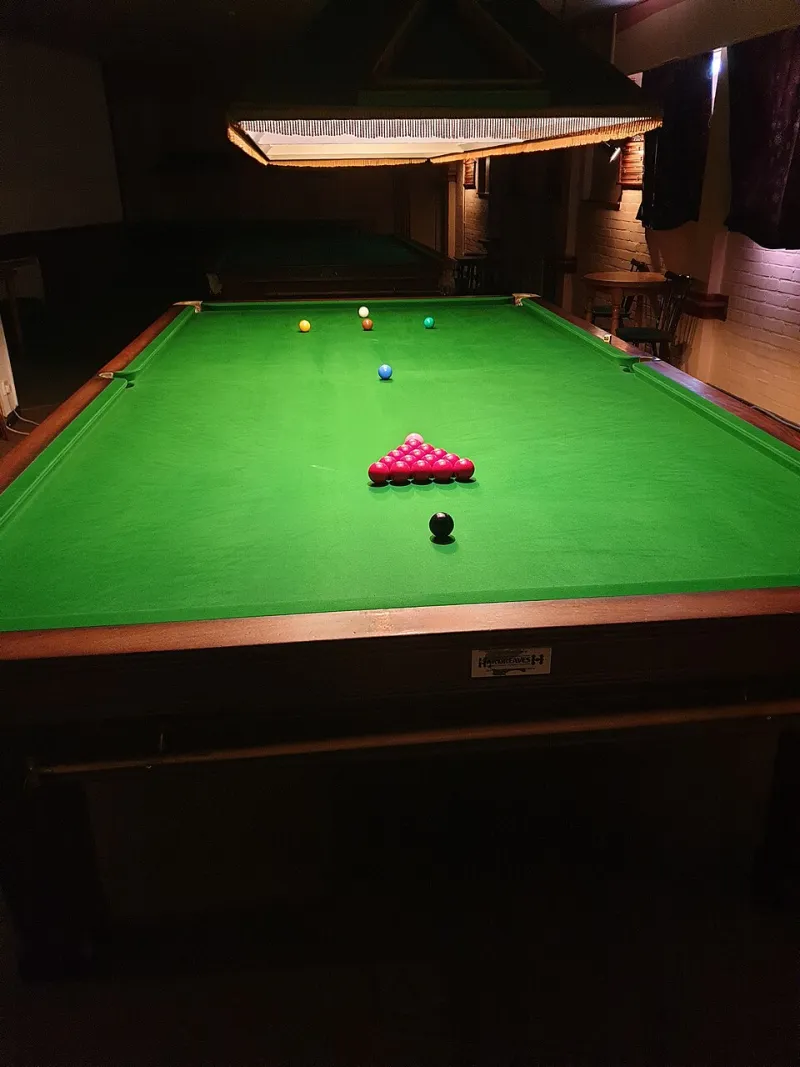
Photo: old Scottish snooker hall interior with green table, via cdn.pixabay.com
Every snooker player has a room behind them. Not the arena, not the televised table, but the first place where the cue felt like an extension of the arm and the smell of chalk hung in the air like fog. For Stephen Maguire, that room was in Glasgow. And if you want to understand the century habit, you have to start there.
Glasgow snooker culture has never been precious. It is a city of clubs above shops, function rooms with low ceilings, and tables that have seen more three-hour grudge matches than any television studio. The wind off the Clyde is not a metaphor. It gets into the building. The hall is where you learn to score, because the regulars do not clap a clever safety. They ask why you did not make the hundred.
The Halls Above the Shops
You will hear older players talk about the Glasgow club circuit with a mixture of affection and scar tissue. The Riley’s on a busy street. The Q Club with its queues for the match table. The quiet rooms where the only sound was the click of balls and the occasional mutter of a man who had just missed a pink. These were not academies. They were snooker rooms in the proper sense: places where you paid for the table, took your turn, and learned to survive.
For a young cueman, that environment is a finishing school. You see the same faces every week. You learn which regular has a ferocious long game and which one will bore you to death with safety. You learn that a 40 break is not enough. You learn that a century is not just a good score; it is a way of ending a conversation.
Maguire came through that world. The attacking instinct that fans love was not invented on television. It was forged in club matchplay, where the bold player is both admired and tested. In those rooms, a maximum is a legend told at the bar. A century is currency.
Junior Ladders and the Hard School
The Scottish junior scene of the 1990s was not a soft landing. It was a ladder with splinters. Young players came through local leagues, regional events, and practice matches that felt like wars of attrition. The names around Maguire’s generation are familiar to anyone who followed Scottish snooker: John Higgins, Alan McManus, Graeme Dott, and a supporting cast of amateur champions who could have gone further if the tour had been kinder.
That company matters. When you practise alongside players who expect to make centuries, you start to expect it too. The junior scene was not just about technique. It was about standards. You did not get a medal for a nice 60. You got asked why you did not finish the frame.
Maguire’s century instinct grew in that hothouse. It is one thing to be a heavy scorer in isolation. It is another to be a heavy scorer when the next table has a future world champion on it, and the older men are watching, and the pot is not just for pride.
The Century Habit Was Learned in Company
There is a romantic idea that maximum-break players are loners, chasing perfection in an empty room. The truth is more social. The century habit is learned in company. You watch a better player take the cue ball round the angles. You copy it. You fail. You watch again.
Glasgow’s halls were full of that kind of learning. A young Maguire would have seen players who could make 80s look easy and players who could make 20s look like hard work. The contrast teaches you what matters. It teaches you that the scoreboard does not care about style unless the style puts points on it.
Fans who saw him come through will tell you the same thing: he was never a passive player. He wanted to score. He wanted to make the big break. That instinct can tip into risk, but in the right room it is a virtue. The hall rewards the player who can finish.
What the Halls Left Behind
The Glasgow club scene has changed. Some rooms have closed. Some have been rebranded. The old regulars have thinned out, and the junior ladders are more structured now, with academies and coaching programmes that would have seemed exotic in Maguire’s early days. That is not a bad thing. But something is lost when the club room becomes a classroom.
The club room taught you how to play in public. It taught you how to handle a bad bounce, a noisy table, and an opponent who knew every trick. It taught you that a century is not a trick shot; it is a statement of intent.
Maguire’s game still carries that hall dust. The attacking instinct, the willingness to chase the big break, the occasional stubbornness that makes him so watchable: it all comes from somewhere. Every maximum he makes has a Glasgow room behind it. Every century has a regular in the corner, arms folded, waiting to see if he finishes the job.
So when the television lights go up and the commentators talk about maximums, remember the chalk dust and the Clyde wind. The halls made the habit. The habit made the headlines.